ServicesConcrete Side Yards
Concrete Side Yards in Costa Mesa
The narrow strip between your house and the fence does a lot of work. Trash bins roll through it, hoses live there and roof water crosses it. We pour side yards pitched to carry water off your walls, with meters and AC units left reachable, on a schedule you know in advance.
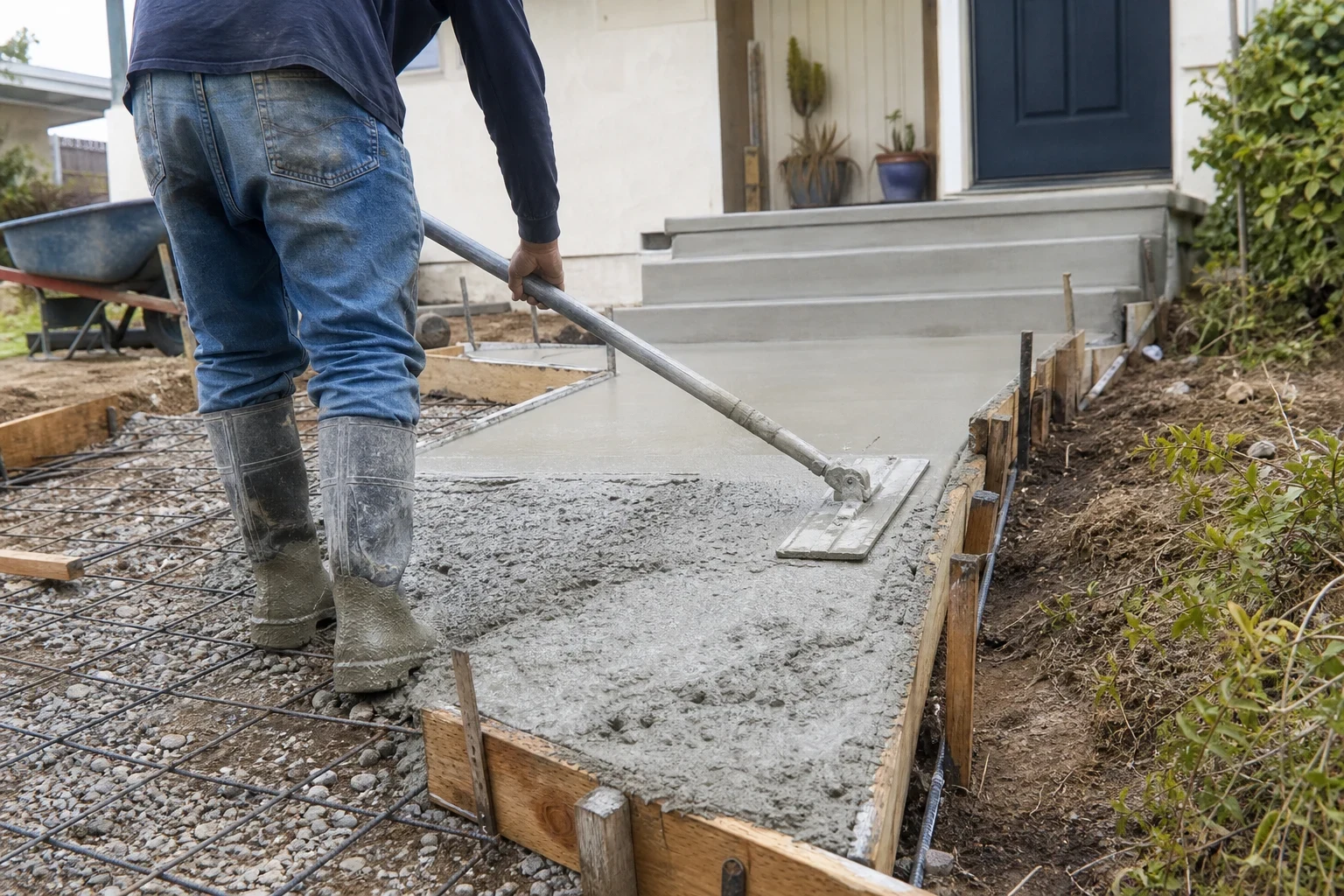
A side yard that stays dry and easy to use
Most side yards start as dirt, loose gravel or a few stepping stones. Over time they turn into a weed patch that gets muddy after every rain, and water can sit right against the stucco. A concrete side yard gives you a firm, level path from the front of your home to the back, with a slight fall that moves water toward the street or a drain instead of your foundation.
Side yards are tight work. The space is often only a few feet wide, with a gas meter, hose bibs, a sewer cleanout and an air conditioner in the way. We map every one of them before the first form goes in, so the finished slab looks intentional and nothing gets buried.
We also plan the timing with you. You get a start date, an arrival window for each crew day and a heads-up from us if weather or the concrete supplier moves things. You can plan your week with the work in mind instead of waiting by the gate.
What your side yard project includes
Clearing and haul-off
We remove gravel, old pavers, stepping stones, weeds and any broken concrete, then haul it away. You are not left with a pile on the driveway.
Grading for drainage
We set the base so the finished surface falls away from your walls. Where the yard is long or flat, we can add an area drain or a channel drain and tie your downspouts into it.
Compacted base and reinforcement
A compacted base under the slab helps it stay put on the clay soils common in this area. We add reinforcement sized to how the path will be used, from foot traffic to rolling bins.
Clean edges at utilities
We form neatly at gas meters, cleanouts, hose bibs and AC pads, leaving the clearance you need to reach them later. Nothing gets poured over.
Stucco and weep screed protection
We keep the concrete below the metal weep screed at the base of your stucco walls so moisture can still escape. Burying that edge is a common mistake that leads to trapped water.
Finish and control joints
A broom finish gives good grip when the path is wet. We cut control joints at close, even spacing, which suits long, narrow slabs and keeps cracking in planned lines.
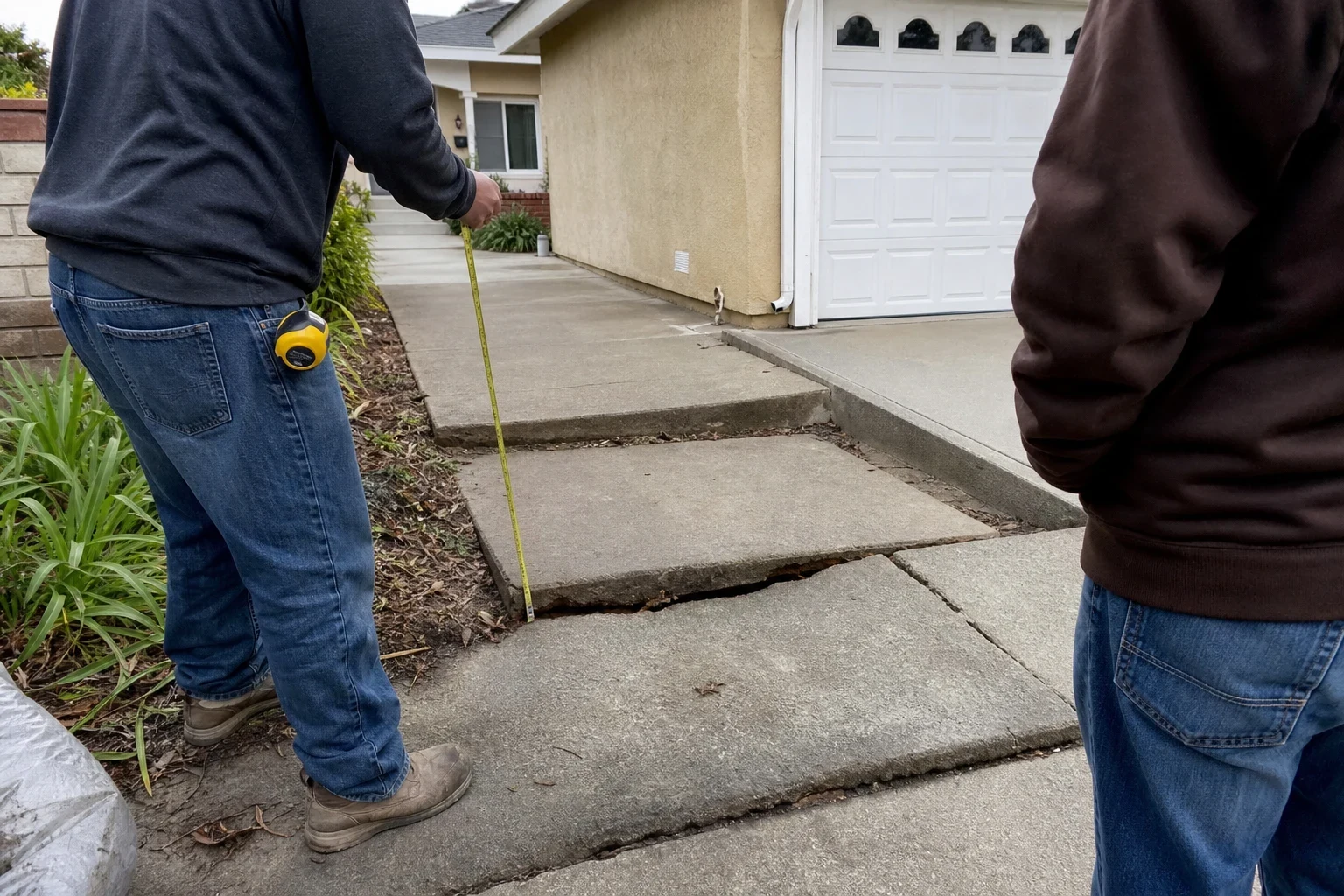
When a side yard is asking for concrete
- Muddy shoes after a storm
- If taking the bins out after rain means tracking dirt back inside, a slab ends that.
- Water pooling by the wall
- Puddles against the foundation or damp stains on the lower stucco mean water is flowing the wrong way. Proper grading under new concrete sends it off.
- Gravel that keeps scattering
- Loose rock gets kicked into planters, sinks into the soil and makes rolling a trash can a chore. Concrete stays where it is.
- Weeds you keep pulling
- A narrow strip that never stays clean is one of the most common reasons homeowners call us about this space.
- Wobbly stepping stones
- Stones that tip or sit uneven are a tripping risk, especially at night on the way to the back gate.
How your side yard project runs
- 1
Walkthrough and measuring
We walk the side yard with you, measure it and note every meter, drain, cleanout and wall. We talk through drainage, finish and how the concrete will get back there. You get your quote by phone and a written estimate that lists each part of the job.
- 2
Setting the schedule
We pick a start date together and give you an arrival window for each day. If rain is coming or a delivery slips, we let you know as soon as we do and offer the next workable date.
- 3
Demo, grading and forms
Usually the first day. We clear the area, grade for fall, compact the base, set forms and place reinforcement. We need gate access, and pets should stay inside.
- 4
Pour and finish
Concrete comes in by pump line or wheelbarrow, depending on access. We place it, finish it, broom it and cut the joints the same day.
- 5
Cleanup and curing guidance
The crew cleans the work area and rinses splatter off walls and fences before packing up. You get clear timing for foot traffic and for rolling the bins back into place.
What affects the cost of a concrete side yard
Every side yard is a little different, so we price after we have seen yours. The biggest drivers are how much area there is, what has to come out first and how hard it is to get concrete to the spot. We explain each line on the estimate so nothing shows up later as a surprise.
- Length and width
- Square footage sets the amount of concrete, base and labor. Long runs that wrap to the backyard add up quickly.
- Access for the pour
- If a truck chute cannot reach, we use a pump or wheelbarrows. A narrow gate or a long carry adds time and equipment.
- Removal of what is there now
- Pulling out gravel or old pavers is lighter work than breaking out an old slab. Haul-off weight affects the price too.
- Drainage work
- Adding area drains, a channel drain or downspout connections adds material and trenching, and it is often worth it on flat lots.
- Finish choice
- A standard broom finish is the simplest. Color or a stamped pattern to match a patio adds steps and cost.
Side yard questions we hear often
- How soon can I walk on my new side yard?
- Plan on keeping off the new slab for the first day or so. After that, walking out to the back gate is generally okay. Wait several more days before you roll full trash bins across it. Concrete keeps hardening for roughly four weeks, and once the pour wraps up we tell you the exact timing for your slab.
- Can you pour right up against the house?
- Yes, with care. We keep the surface below the weep screed at the bottom of the stucco and slope the slab away from the wall. That keeps water out of the wall and away from the foundation.
- What happens with my AC unit and gas meter?
- We pour up to them and leave room to service both. If an AC unit sits on an old pad, we can form a new pad as part of the slab. We do not move gas meters, so the layout works with where yours sits.
- Does someone have to be home while you pour?
- Usually no. Leave the gate open or unlocked, keep pets indoors and move cars if the pump or truck will need the driveway. The day before, we call to confirm the arrival window so you are not guessing.
- Can the side yard connect to my front walk or backyard?
- It can. Many homeowners pair a side yard with our walkways and sidewalks or concrete backyards work so the path runs in one continuous line. Doing it together usually means one schedule and one set of crew days.
- Do I need a permit for side yard concrete?
- Simple flatwork on your own property often does not need one, but drainage changes or work near property lines can bring in requirements. We check what applies to your job before we schedule and tell you plainly.
Ready to finish that side of the house?
Tell us about your side yard and we will set up a walkthrough at a time that works for you. You will know the plan, the price and the start date before we lift a shovel.