ServicesWalkways and Sidewalks
Walkways and Sidewalks in Costa Mesa
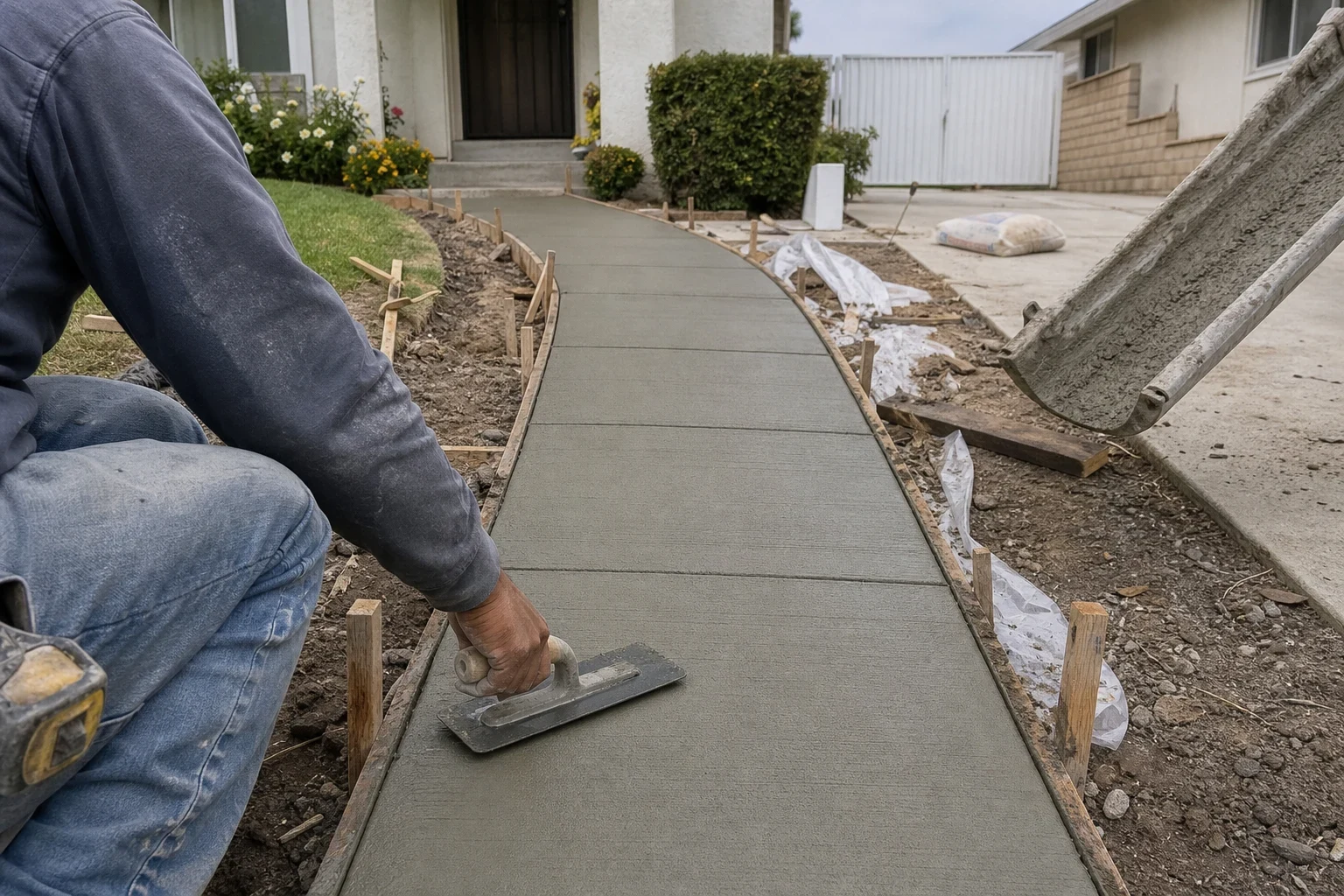
We tear out tired paths and pour new concrete walkways that are level, safe underfoot and pitched away from your home. Before we start, you'll know which days we need, when the crew arrives, and how soon you can walk on it again.
A path to your door you don't have to think about
A walkway is the concrete you use most and notice least, until a panel lifts or a puddle sits by the front step. We pour new walkways and sidewalks from the street to your door, along the side of the house, out to the backyard, or between a patio and the garage.
Most walkway jobs are short, but they touch the entrance you use every day. That's why we lay out the timeline before anything gets broken up: which day demolition happens, when the forms go in, the pour date, and when it's safe for foot traffic. If a delivery slips or the weather turns, we call you instead of leaving you guessing.
What your walkway project includes
Layout you approve first
We mark the path on the ground with paint or string so you can see the width and curves before we dig. Most front walks feel right at four feet wide, so two people can pass.
Removal and haul-off
Old concrete, pavers, gravel or sod comes out and leaves with us. You won't have a pile of rubble sitting in the yard.
Compacted base and reinforcement
We grade the soil, add and compact a base layer, and set rebar or wire where the path needs it. This prep work does more than anything else to keep panels from settling or lifting later.
Drainage pitch
Every walkway gets a slight slope so rain runs off toward the yard or street, not toward your home's foundation or front door.
Control joints and your choice of finish
We cut joints at planned spacing so the concrete cracks where we want it to, hidden in a straight line. Choose a broom finish for grip, exposed aggregate, or a pattern from our stamped concrete work.
Cleanup and a clear handoff
We clean up the forms, wash down the edges, and tell you exactly when you can walk on the new path and when a wheelbarrow or bike is fine.
Signs it's time for a new walkway
Panels that catch your toe
When one slab sits higher than the next, it's a tripping hazard for guests, kids and anyone carrying groceries. Roots and shifting soil usually cause it, and a new base is the lasting answer.
Water that pools or runs toward the house
Puddles after a rain, or a walk that drains back toward your foundation, means the slope is wrong. A new pour lets us set the pitch correctly.
Pavers or stepping stones that keep moving
Loose stones and sunken pavers turn into weekend chores. A continuous concrete path stays put and is easier on strollers, carts and walkers.
Cracks spreading across the whole path
One hairline crack is normal. Many crossing cracks and crumbling edges usually mean the concrete has reached the end of its life.
No real path at all
Worn grass from the driveway to the door, or a muddy route to the side gate, tells you where a walkway belongs.
How a walkway job runs
- 1
Walkthrough and written schedule
We look at the route, the slope of the ground and how your household uses that entrance. Then you get a quote and a day-by-day plan, including which door to use while we work.
- 2
Demolition and grading
The crew arrives inside the window we gave you, breaks out the old surface, hauls it off and shapes the soil. For most homes this part fits in one day.
- 3
Forms, base and steel
Forms go in along the layout you approved, the base gets compacted and reinforcement is set. You're welcome to check it before the pour so the final shape matches what you expect.
- 4
Pour and finish
We place the concrete, level it, round the edges, cut the joints and apply your chosen finish. If the forecast or a supplier forces a new pour date, we call you as soon as we know.
- 5
Cure and walk-on day
You can usually step onto the new path within a day or two, though the concrete keeps hardening for several weeks. We give you clear dates for normal use and heavier loads, and the site is clean when we leave.
What affects the price of a walkway
Three things drive most of a walkway price: the amount of concrete in the path, what we have to remove before we start, and how hard the spot is to reach. We walk the route with you and put the quote in writing, line by line, so you can see each cost and change the plan if something doesn't fit your budget.
- Length, width and thickness
- Every extra foot of length or width adds concrete, forming and finishing time. Where a path crosses the driveway apron, we may pour it thicker to handle car tires.
- What's there now
- Pouring on bare dirt is the simplest start. Breaking up an old slab and hauling it off takes more labor, and thick concrete or tree roots stretch that day further.
- Access to the work area
- When the truck can pull up close to the forms, the pour moves fast. A tight side yard or a backyard behind a gate can mean wheelbarrows or a pump, which adds cost.
- Finish and decorative details
- A broom finish keeps things simple. Color, exposed aggregate, borders or a stamped pattern each bring added material and hand work.
- Steps, slopes and permits
- If the ground falls toward the street, the path may need steps or extra grading. Sidewalk work in the public right-of-way usually calls for a city permit, and we'll explain what that involves for your property.
Walkway and sidewalk questions
Something not covered here? (949) 841-4109
How long will I be without my front walk?
Most front walkway jobs take a few days from tear-out until the new path is ready for your feet. You'll have the specific dates from us before the first piece of old concrete comes up. If that walk is your only way in, we'll set up a temporary route with you ahead of time.
Can the new walkway match my driveway or patio?
In most cases, yes. A broom finish is easy to match closely, and with exposed aggregate or stamped concrete we can coordinate color and texture. Fresh concrete starts out lighter than older slabs and evens out as it weathers, and we'll show you what that looks like.
Do I need a permit?
A path that sits fully on your own lot usually doesn't need one. The strip of sidewalk along the street often belongs to the public right-of-way, and that work generally requires a city permit. We sort out which case you're in before we put you on the schedule.
What happens if the weather changes on pour day?
Rain is rare here, but a heavy storm will push a pour. When we decide to move the date, you hear from us right away along with the new day. You won't be left wondering whether the crew is coming.
Can you widen or reroute my existing path?
Yes. Plenty of homeowners take the chance to widen a cramped walk, add a gentle curve or run a branch to the side gate. We mark the new line on the ground first so you can see it and make changes before any digging.
Will the new concrete crack?
Some fine cracking is normal, since concrete shrinks while it cures and the soil under it shifts over the years. A well-compacted base, reinforcement and control joints placed at the right spacing keep any cracks narrow and mostly tucked into the joint lines where you won't notice them.
Ready for a walkway you can count on?
Tell us where the path goes and how you use it. We'll give you a quote and a timeline you can plan your week around.