ServicesStamped Concrete
Stamped Concrete in Costa Mesa
We pour and stamp new concrete in patterns like slate, flagstone, cobblestone and wood plank, colored to suit your home. You get a clear timeline before we start, an arrival window on pour day, and a call from us if weather or the concrete supplier moves anything.
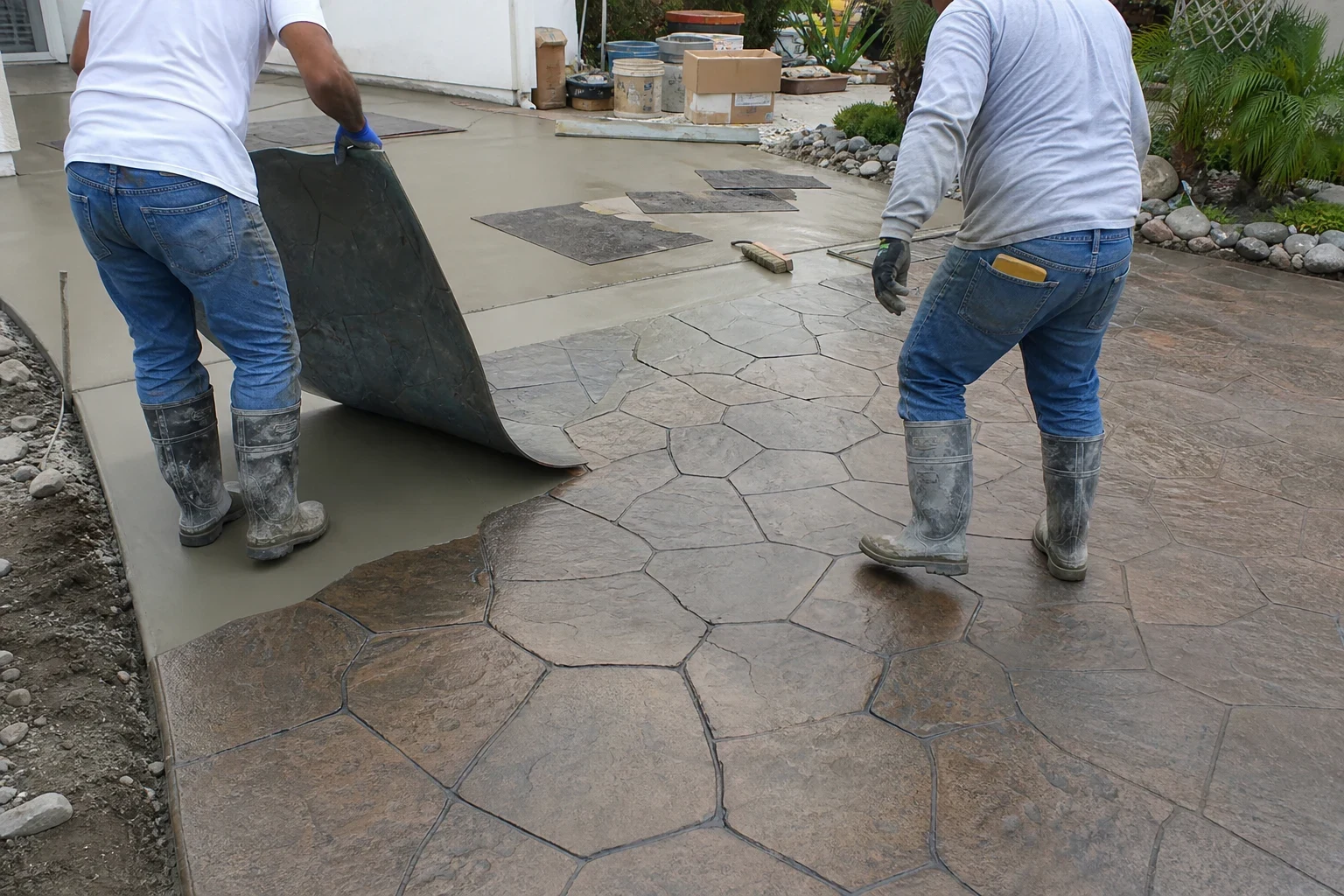
Stamped concrete: the look of stone, the strength of a slab
Stamped concrete is a regular reinforced slab that gets color and a pressed texture while it is still soft. The result looks like stone, brick or wood but holds up like concrete, and there are no individual pavers to shift or sprout weeds.
It is a good fit for patios, front walks, pool decks and courtyards, where people see the surface up close. On a plain driveway or a work pad, standard broom finish usually makes more sense, and we will tell you so.
Stamping has a short working window. Once the truck arrives, the crew has a limited time to color, texture and detail the slab before it sets. That is why we plan crew size, mix and timing ahead, and why we are straight with you about dates from the first call.
What a stamped concrete job includes
Removal and base prep
If old concrete or turf is in the way, we break it out and haul it off. Then we grade and compact the base so the new slab has even support and drains away from your home.
Forms and reinforcement
We set forms to the shape you want, including curves, and place rebar or wire to tie the slab together.
Color in two layers
Base color goes into the mix or is broadcast on top as a color hardener. A contrasting release agent adds the darker tones in the grout lines and low spots, which is what makes the pattern read as natural stone.
Stamping and edge detail
The crew presses texture mats across the slab in sequence and hand-tools the edges and borders so the pattern runs clean to the forms.
Control joints in the pattern
We cut joints where the slab needs them and line them up with grout lines whenever we can, so they blend in.
Wash and sealer
After the slab cures, we rinse off excess release and apply a sealer that deepens the color. Near a pool, we add a grit additive for better footing.
Signs stamped concrete is the right choice
Your old patio is past saving
Heaved, broken or badly sunken slabs are a good moment to tear out and pour something you actually like looking at.
Plain gray feels unfinished
If the backyard looks like a parking area, color and texture can make it feel like part of the house.
You like pavers but not the upkeep
Stamped concrete gives a similar look without sand joints, weeds or individual stones settling unevenly.
You want a pool deck that looks good and grips
A textured, sealed surface with grit in the sealer gives bare feet more traction than smooth troweled concrete. Our Concrete Pool Decks page covers deck work in more detail.
You are planning around an event
A graduation party or a family visit gives you a real deadline. Tell us the date and we will tell you honestly whether we can meet it.
How your project runs, start to finish
- 1
Phone call and site visit
It begins with a conversation by phone, then a visit to measure the area and go over patterns and colors with you. You get a written estimate that shows a realistic start date and how many workdays to expect.
- 2
Prep days
Demo, grading, forms and reinforcement typically happen a day or two ahead of the pour. You will know which days the crew is coming and roughly when they will arrive.
- 3
Pour and stamp day
We send you an arrival window the evening before. The crew places the concrete, adds color, presses the pattern and finishes the edges in one steady push. A morning marine layer can slow the set, so we go by how the slab feels, not by the clock.
- 4
Wash and seal
A few days later we return to rinse off the release agent and seal the surface. If rain or wind forces a change, we phone you with the new date.
- 5
Cure and walkthrough
Walking on the new surface is generally okay after a day or two of curing. Before we leave, we look over the finished slab together and let you know when it is safe for patio furniture, a grill or a parked car.
What affects the cost of stamped concrete
Stamped work costs more than a plain broom finish because it adds color, texture mats and extra hands on pour day. Your written estimate lists each part of the job on its own line, so you can see where the money goes before anything is scheduled. Here is what tends to push your total up or down.
- How big the area is and how it bends
- The number of square feet drives most of the concrete and labor. Curved edges, steps and lots of corners add time to the forming work.
- Your pattern and color choices
- A single color with one texture goes down faster than a multi-tone finish with a hand-cut border or a contrasting band.
- Demo and base work
- An old slab, tree roots or soft soil have to be handled before new concrete is placed, which adds breakout, hauling and base prep to the job.
- How the truck reaches the forms
- With an open driveway, the truck can back up and chute concrete straight into place. A narrow side yard or a backyard the truck cannot reach usually needs a pump line or wheelbarrow runs, which adds labor hours and equipment to the estimate.
- Sealer and slip resistance
- Pool decks and shaded areas often get a grit additive in the sealer, and some need a second coat.
Stamped concrete questions
Something not covered here? (949) 841-4109
How long does a stamped concrete patio take?
Most residential jobs take a few working days spread over about a week: prep, pour and stamp, then a return visit to wash and seal. Bigger yards or projects with demo take longer. We give you the expected schedule in writing before we start and update you if it changes.
Can you stamp over my existing concrete?
A pattern can only be pressed into concrete that is still soft, so an old slab cannot take a stamp. Instead, we break out what is there, haul it away and pour fresh. Starting over also gives us the chance to correct the slope and drainage beneath the new surface.
Is stamped concrete slippery around a pool?
Smooth sealer can get slick when wet. We choose a textured pattern and mix a grit additive into the sealer for pool decks and other wet areas. It feels slightly sandy underfoot and gives much better grip.
Will the color fade in the sun?
Strong sun slowly dulls any sealed surface over time. The color in the concrete stays put; it is mostly the sealer that wears. Resealing every few years brings back the depth, and we will show you what product we used so you can keep up with it.
Will stamped concrete crack?
Concrete shrinks as it cures, so some cracking is normal. Good base prep, reinforcement and control joints keep cracks where we plan them. Placing joints along the pattern's grout lines helps them disappear into the design.
What happens if it rains on my pour date?
We do not pour stamped concrete into rain, because water ruins the surface color and texture. If the forecast turns, we call you as early as we can and set the next workable date together.
Ready to plan your stamped concrete?
Let us know where the new surface will go and what style you are picturing, whether that is slate, flagstone or wood plank. On the call we will cover pattern and color choices, an honest timeline and when we can come out to measure in Costa Mesa or a nearby town like Irvine or Newport Beach.