ServicesDriveways
Concrete Driveways in Costa Mesa
We tear out tired, cracked driveways and pour new concrete over a properly compacted base. Before work starts, you get a written timeline showing which days your driveway is closed and when you can park on it again.
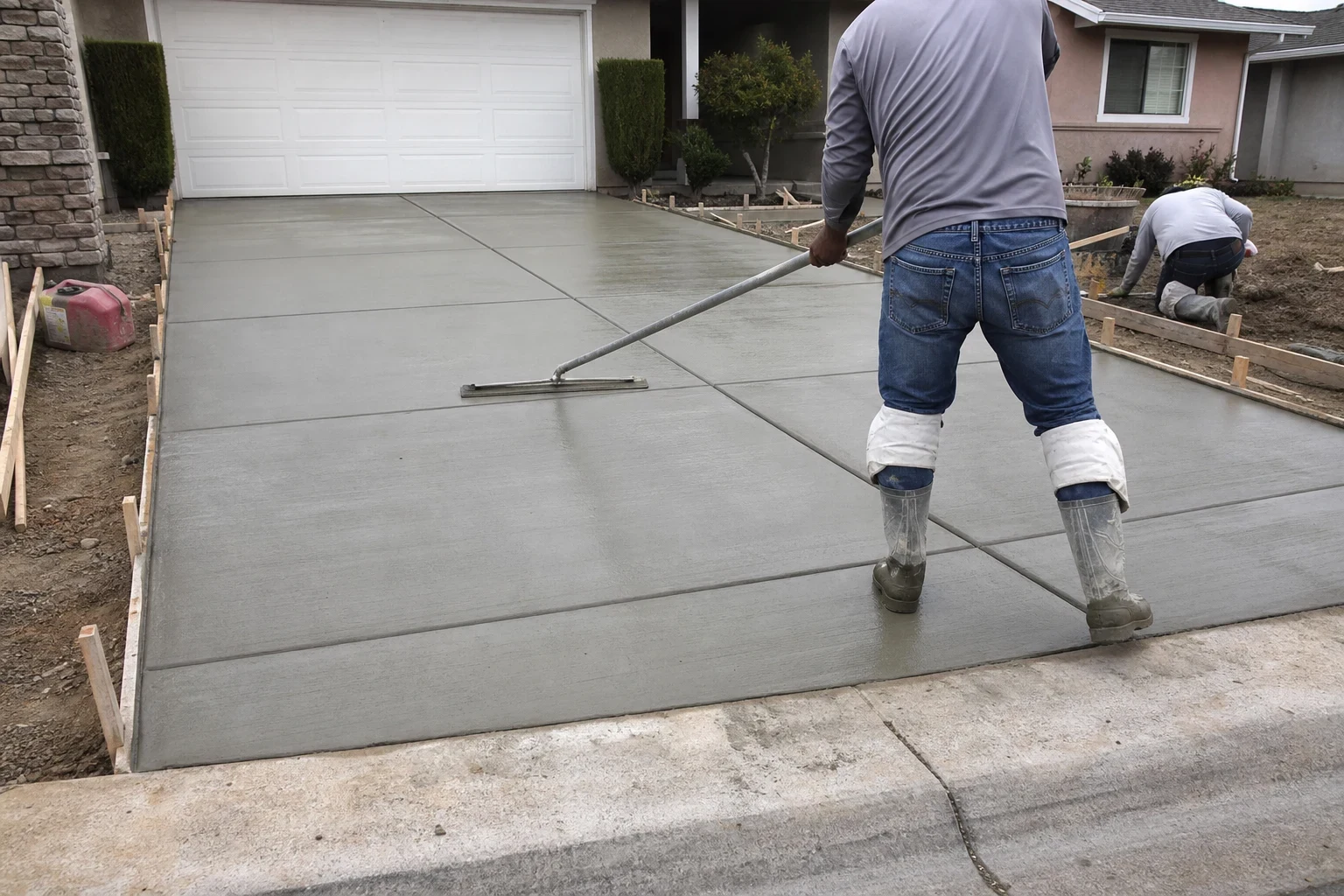
A New Driveway Without the Guesswork
A driveway is the one slab you use every single day, so replacing it touches your whole routine. Where do the cars go? How many days will it take? When can the kids ride bikes on it? We answer those questions up front, in writing, before a single panel comes out.
The job goes smoothly when each stage happens in order. First the old panels come out. Then we correct the soil and base below, build the forms, place the steel, pour, finish, cut joints and give the slab time to cure. When we look at old driveways that failed early, the cause is usually a slab poured too thin or a base that was never packed well, so those are the steps we never rush.
We tell you which morning the crew arrives and give you an arrival window. If the forecast or a delay at the concrete plant moves a pour, you hear it from us the day before, not from an empty driveway at 8 a.m.
Every Step From Tear-Out to Cleanup
- 01
Removing the old concrete
The crew breaks up your existing driveway, loads the pieces and trucks them off the property. We keep the debris contained so the street and your neighbors' cars stay clean.
- 02
Soil grading and compacted base
We slope the ground so rainwater heads away from the garage and your home, then bring in road base and pack it down tight. That solid layer is what helps a driveway resist sinking and cracking down the road.
- 03
Forms and steel
Forms go in at the finished outline and height. Rebar or wire mesh sits on small supports so it lands in the middle of the slab, where it actually adds strength.
- 04
Placing and finishing
We place the concrete, level it and brush on a broom texture so tires and shoes grip. For color or a pattern, see our Stamped Concrete page.
- 05
Saw-cut joints and site cleanup
Joints are cut into the new slab at set spacing. All concrete shrinks slightly while it cures, and those cuts give it a neat, planned line to crack along rather than a random one through the middle of a panel. We finish by cleaning the work area and sweeping your walkway and the street.
Questions about Driveways?
Call(949) 841-4109Signs Your Driveway Is Due for Replacement
Cracks that are spreading
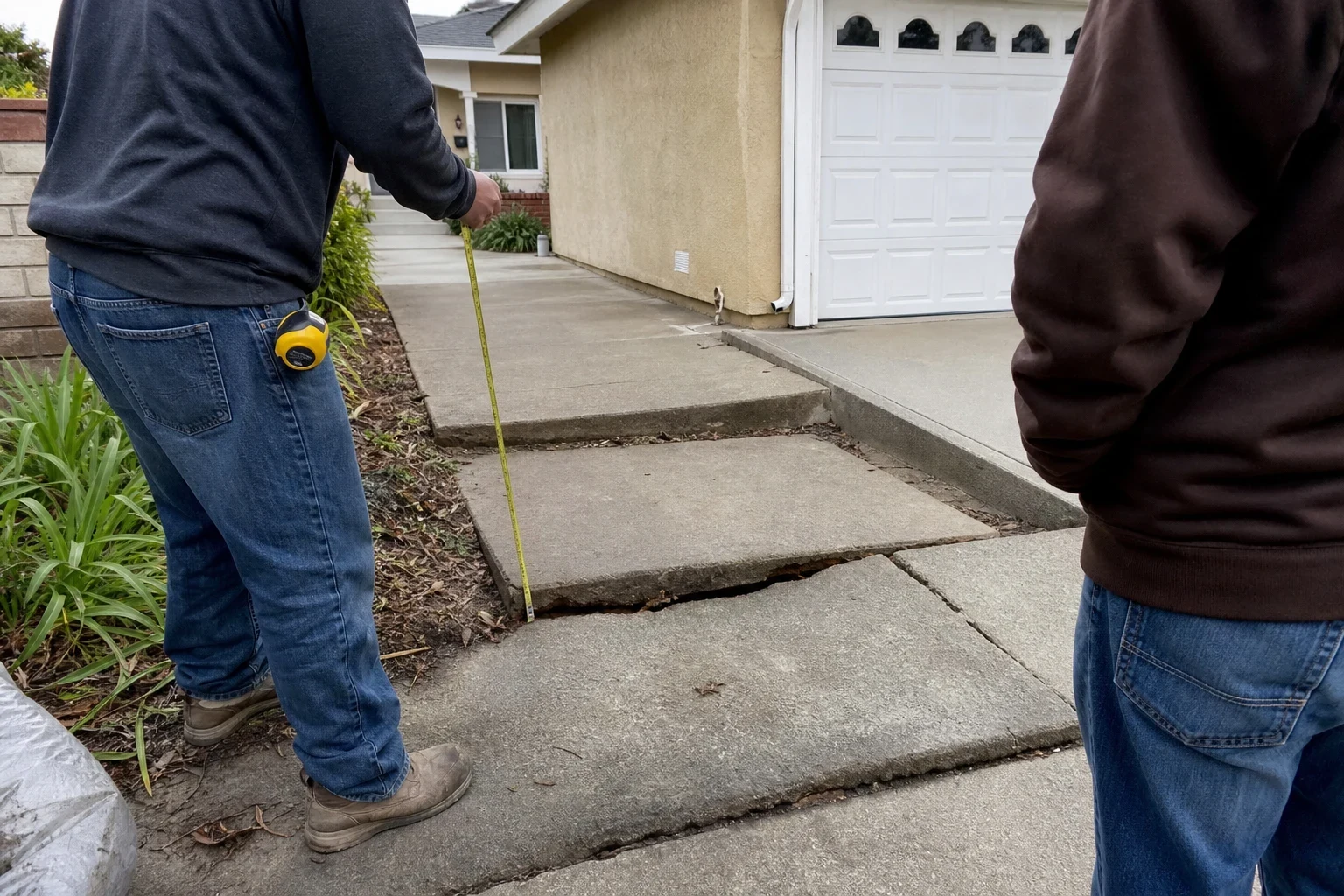
Hairline marks on the surface are normal for concrete and rarely a concern. Gaps wide enough to slip a coin into, cracks that split off in new directions, or a panel broken into several pieces usually point to movement in the ground below.
Panels that have heaved or dropped
Tree roots can lift sections and leave edges people trip on, while soft soil can let other sections sink. In both cases the concrete has lost the solid support it needs.
Puddles by the garage door
When rain flows toward the garage instead of down to the street, the slope is working against you. A new pour lets us set the grade correctly.
A surface that is wearing away
Flaking, small pits and loose stones on top are signs the concrete itself is breaking down. Our mild winters are gentle on slabs, yet years of sun, tires and sprinkler water still wear them out.
The layout no longer fits
If you want a wider drive, room for one more car or an easier route to the side yard, new concrete lets us lay it out around how your household uses it today.
How a Driveway Job Runs, Day by Day
- 1
Site visit and measurements
We look at the driveway, check slope and access, and talk about how you want to use the space. We point out anything that affects the plan, like roots or the city apron.
- 2
Written estimate and schedule
You get line items for the work and a calendar showing demo day, pour day and when the slab is ready for cars. If the apron at the street needs a city permit, we pull it and build that time into the schedule.
- 3
Demo and base day
The crew arrives in the window we gave you, removes the old concrete and grades and compacts the base. Forms and steel usually go in the same day or the next.
- 4
Pour day
We pour early when temperatures are mild, finish the surface and cut joints. We check the forecast the day before and call you if anything shifts.
- 5
Cure and handoff
We walk the finished slab with you and go over when you can walk on it, park on it and run sprinklers near it.
How Your Driveway Price Comes Together
We price each driveway from its own measurements, so the number comes after we have walked the site. The items below make the biggest difference. Each one appears as a separate line on your written estimate, so you can see where the money goes before you agree to anything.
- Square footage and slab depth
- Area sets the baseline. If you park a work truck, a camper or a trailer on the driveway, we may recommend a deeper pour and extra reinforcement to carry that weight.
- Tear-out of the existing concrete
- An old slab that is extra thick or full of steel takes more time to break up, and the heavier load costs more to truck away.
- What we find underneath
- Loose soil, root damage or a low spot that holds water calls for more grading and added base before any concrete goes in.
- Surface finish
- A standard broom texture is the most economical. Color, a stamped pattern or a contrasting border each add labor on pour day plus material, and each gets its own line on the estimate.
- Curb apron and city requirements
- Work on the section where the driveway meets the street usually calls for a city permit and an inspection. That adds a step to the job and a little time to the schedule.
Common Questions About New Driveways
When can I drive my car on the new concrete?
Walking on it is usually fine after a day or two, and a regular passenger car can typically go back on after about a week. Trucks and other heavy vehicles need more time than that. We put the specific dates on your written schedule, so you know how long to park on the street.
How long will I be without my driveway?
On a typical single-family driveway, tear-out and base work usually take a day or two. After that comes the pour, followed by the cure time. Every one of those days is on your written schedule, and we let you know right away if a date moves.
What if the forecast calls for rain on pour day?
Rain and fresh concrete do not mix, so we will not pour in it. We keep an eye on the forecast and call you the day before if the pour needs to shift, with the new date already picked.
Will my driveway project need a permit?
Concrete that sits fully on your own lot often does not need one. The apron at the curb and any public sidewalk are different, because those areas usually belong to the city. When a permit is required, we take care of the paperwork and schedule the inspection.
Could you make my driveway wider or reshape it?
Yes. A replacement is a natural time to add width, an extra parking space or a link to your walkways and sidewalks or side yard. Before we set the layout, we check setbacks and how water will drain.
Ready to Plan Your New Driveway?
Give us a call and tell us what your driveway needs to handle, from daily commutes to a boat trailer. We'll arrange a time to look at it, then put together a written estimate with dates you can plan your week around.